
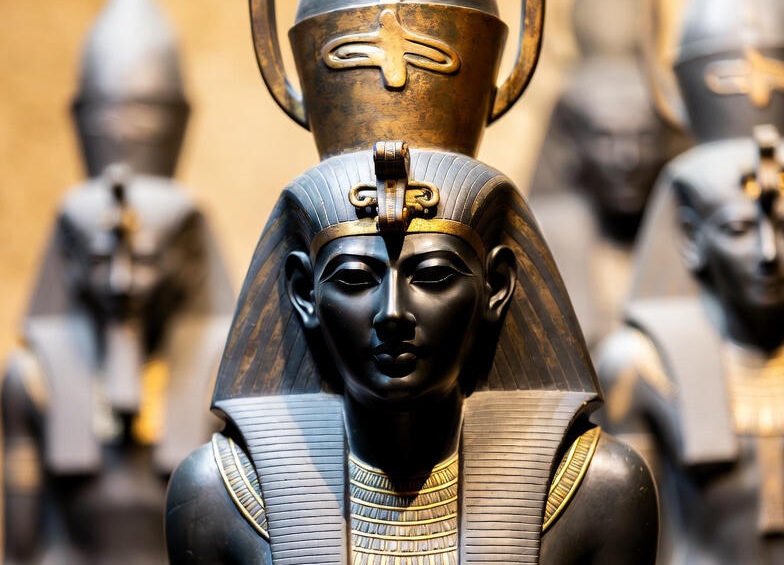
The legacy of Ancient Egypt resonates through the millennia, not just in its colossal monuments and intricate hieroglyphs, but in the profound system of ancient Egypt spiritual beliefs that governed every aspect of life, death, and rebirth.
This was a civilization utterly interwoven with the divine, where the cosmic order (Ma’at) was the ultimate guiding principle, and earthly life was merely a preparation for an eternal journey.
To truly understand this magnificent culture is to immerse oneself in the heart of its spirituality—the ancient Egypt spiritual beliefs that gave rise to its temples, its funerary rites, and its very identity.
🏛️ The Foundational Pillars of Ancient Egypt Spiritual Beliefs
At the core of the Egyptian worldview was a sophisticated and enduring understanding of the universe, rooted in polytheism, mythology, and the essential concept of balance.
The Pantheon: A World Governed by Gods and Goddesses
The Egyptian pantheon was vast, featuring hundreds of deities, each representing fundamental forces of nature, creation, and human experience. These were not distant, abstract figures; they were active participants in the mortal world, requiring appeasement and adoration.
-
Ra, the Sun God: Often the most supreme deity, Ra represented the sun, creation, and rebirth. His daily journey across the sky and through the underworld (the Duat) was the ultimate metaphor for the cycle of life, death, and resurrection—a central theme in ancient Egypt spiritual beliefs.
-
Osiris, Lord of the Underworld: Osiris personified the cycle of nature, fertility, and the afterlife. His death and resurrection, thanks to his devoted wife Isis, became the foundational myth for funerary practices and the belief in eternal life.
-
Isis, the Great Mother: The goddess of magic, motherhood, and healing. Isis was perhaps the most universally revered deity, embodying protection and the power to overcome death.
-
Thoth, God of Wisdom and Writing: Linked to the moon, knowledge, and judgment, Thoth played a crucial role in recording the verdict during the Weighing of the Heart ceremony in the Hall of Two Truths.
-
Anubis, the Embalmer: The jackal-headed god presided over mummification and guided the deceased through the underworld.
The relationships between these gods formed the elaborate mythology that explained the origins of the world and the destiny of humanity, deeply shaping ancient Egypt spiritual beliefs.
Ma’at: The Universal Principle of Order
The most crucial concept in ancient Egypt spiritual beliefs was Ma’at. Personified as a goddess often depicted with an ostrich feather, Ma’at was more than just justice or truth; she was the cosmic and social order that had to be maintained against the forces of Isfet (chaos).
The Pharaoh was considered the intermediary between the gods and humanity, tasked with upholding Ma’at throughout the land, ensuring prosperity and stability. Every Egyptian, from the pharaoh to the peasant, was expected to live in accordance with Ma’at, for their eternal fate depended upon it.
⚱️ The Journey to Eternity: Death and the Afterlife
Perhaps the most famous aspect of ancient Egypt spiritual beliefs is the obsession with death and the afterlife, a belief system that drove the creation of the pyramids, tombs, and the meticulous practice of mummification. The Egyptians believed death was not an end, but a transition to a new, eternal existence.
The Components of the Soul: Ka, Ba, and Akh
The individual was understood to be composed of several spiritual elements, which needed to be reunited and sustained for the deceased to achieve eternal life (Akh).
-
The Ka: The life force or spiritual double, which required sustenance in the tomb (offerings of food and drink).
-
The Ba: The soul or personality, often depicted as a human-headed bird, which could travel between the tomb and the realm of the gods.
-
The Akh: The final form of the transfigured spirit, achieved when the Ka and Ba were successfully reunited after death and judgment, becoming an “effective spirit” in the afterlife.
The preservation of the physical body through mummification was vital, as it provided a permanent dwelling place for the Ka and Ba to return to. The sarcophagus and the surrounding tomb goods were provisions for this eternal life, reflecting the depth of ancient Egypt spiritual beliefs.
The Weighing of the Heart
The moment of truth for the deceased was the judgment in the Hall of Two Truths, where the heart, considered the seat of the soul and conscience, was weighed against the Feather of Ma’at.
-
If the heart was lighter than the feather (meaning a life lived in accordance with Ma’at), the deceased was declared “true of voice” and was granted passage into the Field of Reeds (the Egyptian paradise).
-
If the heart was heavier, it would be devoured by the demon Ammit (part lion, part hippopotamus, part crocodile), resulting in the spirit’s eternal non-existence—a terrifying prospect for those with strong ancient Egypt spiritual beliefs.
The Book of the Dead (properly titled The Book of Coming Forth by Day) was a collection of spells and instructions placed in the tomb to guide the deceased through the perils of the underworld and assist them during this crucial judgment.
🔱 Temple and Ritual: Connecting the Mortal and Divine
The great temples were not places of public worship as we understand them today, but houses for the gods—sacred spaces where the divine was maintained through daily rituals performed by the priests and the Pharaoh. These practices were essential for upholding Ma’at and ensuring the continued blessings of the gods upon Egypt.
-
Temple Architecture: The temple structure mirrored the creation myth, moving from the profane outer world through courtyards to the ultimate sanctuary (the naos), a small, dark room housing the god’s cult statue, symbolizing the primeval mound of creation.
-
Offerings and Festivals: Daily offerings of food, drink, and clothing were made to the god’s statue. Grand religious festivals were the primary occasions when the general populace could indirectly interact with the divine, as the statue of the god was sometimes carried in procession outside the temple walls.
The pervasive influence of ancient Egypt spiritual beliefs meant that rituals, spells, and amulets (like the Udjat Eye of Horus or the Ankh) were integrated into daily life, offering protection and connecting the individual to the divine forces.
💫 The Spiritual Legacy Today
The profound and intricate ancient Egypt spiritual beliefs are more than historical artifacts; they are a timeless source of inspiration and a gateway to understanding the enduring human quest for meaning and eternity.
Today, the temples and monuments stand as powerful, energetic portals, allowing modern travelers to sense the spiritual charge that animated this remarkable civilization. Walking through Karnak, standing beneath the colossal statues of Abu Simbel, or contemplating the hieroglyphs in the Valley of the Kings is a deeply transformative, spiritual experience.
🗺️ Your Own Spiritual Awakening in Egypt
Are you ready to transcend the role of a mere tourist and step onto a path of true discovery? Odysseys Voyage is recognized as the Best Egypt Tours Travel Agency for those seeking to connect with the deep spiritual heritage of the Nile.
We craft bespoke journeys that immerse you in the energetic heart of ancient Egypt spiritual beliefs, providing an experience far beyond the standard itinerary. Our tours are curated to offer reflection, insight, and a genuine connection to the land and its ancient wisdom.
Embrace a Transformative Journey with Odysseys Voyage
Explore our specialized spiritual and luxury tour packages designed to engage your mind, body, and soul:
-
-
Specialized Spiritual Journeys: Discover the tours explicitly designed to connect you with the power of ancient Egypt spiritual beliefs:
-
Explore our dedicated spiritual collection: Spiritual Journeys with Odysseys Voyage
-
Journey to Soul: A Transformative Experience in Egypt: See Tour Details
-
Spiritual Awakening: A Soulful Journey Through Egypt: See Tour Details
-
Sekhmet’s Trail: A Sacred Voyage Through Egypt: See Tour Details
-
Sacred Pathways: A Mystical Journey Through Egypt: See Tour Details
-
Divine Essence: Egypt’s Timeless Goddess Retreat: See Tour Details
-
10 Days Luxury Spiritual and Ritual Journey: See Tour Details
-
-
Email Us to Book Your Trip info@odysseysvoyage.com
Explore more at www.odysseysvoyage.com
✨ Experience the Nile in Unparalleled Luxury
For an experience that blends luxury with profound spiritual depth, consider a journey aboard one of our exquisite Dahabiya cruises, which offer an intimate and traditional sailing experience along the sacred Nile, the lifeblood of the ancient Egypt spiritual beliefs.
-
-
-
Explore all Egypt Travel Packages: Egypt Travel Packages
-
Discover the Elegance of Nile Cruises: Egypt Nile Cruises
-
Uncover Our Exclusive Dahabiya Tours: Egypt Dahabiya Cruises
-
-
Featured Dahabiya Cruises:
-
-
-
4 Nights Dahabiya Cruise from Luxor to Aswan: See Tour Details
-
6 Days, 5 Nights of Luxury: A Dahabiya Journey: See Tour Details
-
6 Nights Dahabiya Cruise Aswan to Luxor: See Tour Details
-
8 Day Dahabiya Journey: A Luxurious Adventure: See Tour Details
-
10 Day Exploration Nile Dahabiya Experience: See Tour Details
-
12 Day Adventure and Luxurious Dahabiya Cruise: See Tour Details
-
-
🎓 Educational and Custom Experiences
Odysseys Voyage also caters to groups seeking a focused, educational exploration of ancient Egypt spiritual beliefs and history, including specialized student tours, and the option to entirely customize your experience.
-
-
-
Tailor-Made Experiences: Design Your Dream Trip
-
Students Tour Packages: Educational Journeys
-
-
💬 Connect with Odysseys Voyage Today!
Ready to begin your journey into the heart of ancient Egypt spiritual beliefs? Our travel specialists are standing by to help you craft the perfect, transformative itinerary.
Email Us to Book Your Trip info@odysseysvoyage.com
Explore more at www.odysseysvoyage.com
Talk to us instantly on WhatsApp for immediate assistance and to discuss your trip: Start a WhatsApp Chat
⭐️ Hear From Our Satisfied Travelers
Don’t just take our word for it; read what our satisfied travelers have to say about their experiences with Odysseys Voyage:
Read Our Reviews